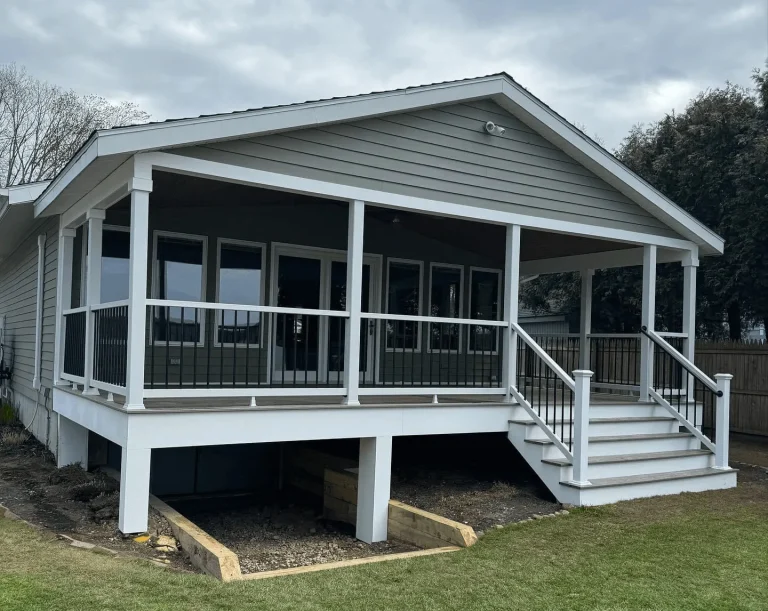
Beyond just the construction, we understand the power of a well-designed deck, recognizing that it extends a home’s living space while simultaneously increasing its property value. With each project, we blend attention to detail with a complete understanding of our clients’ needs, crafting a deck that integrates beauty, functionality, and lasting value.
Professional Composite Decks
- Variety of options: Multiple tiers of composite decking products offer a wide range of durable, low-maintenance options to suit various styles, needs, and budgets.
- High Performance: Composite deck boards won’t rot, warp, or splinter. Backed by TimberTech and Trex’s Limited Warrantys ranging from 25-50 years.
- Sustainably Manufactured: Composite decking is crafted using a mix of recycled wood fibers and plastics, helping to reduce waste and promote sustainable practices.
- Easy Installation: Grooved-edge boards can be paired with hidden fastening systems to create a seamless, screw-free surface for a clean and professional finish.
- Lasting Beauty: On-trend colors featuring refined wood grains that add beauty and luxury to any outdoor space.
Built a step above.
Advantages to Composite Decks


As a top Trex® and TimberTech® deck installer in New England, we have an unparalleled commitment to quality. Our decking offers a blend of durability, low maintenance, aesthetic versatility, environmental sustainability, cost-effectiveness, and safety, making it an ideal choice for homeowners looking to enhance their outdoor living spaces.
Durability and Longevity
- Resistant to Wear and Tear: Our decks are made from a composite material composed of wood fibers and recycled plastic, which provides exceptional resistance to common decking issues such as splintering, cracking, and warping. This makes composite decks significantly more durable than traditional wood decks.
- Weather Resistance: Composite decking is engineered to endure a variety of weather conditions, including extreme heat, cold, and moisture. Unlike traditional wood, it resists rotting, swelling, and insect damage, providing a durable and long-lasting outdoor solution.
Low Maintenance
- Minimal Upkeep Required: One of the most significant advantages of composite decking is its low maintenance requirements. Unlike traditional wood decks that require regular staining, sealing, or painting, composite decks only need periodic cleaning with soap and water to maintain their appearance and functionality.
- Stain and Fade Resistance: Composite decking is designed to resist stains from common spills such as food, beverages, and oil, and it retains its color over time due to its fade-resistant properties. This ensures that the deck remains attractive with minimal effort.
Aesthetic Appeal
- Variety of Styles and Colors: Composite decking offers a wide range of styles, colors, and finishes that mimic the natural beauty of wood while providing the benefits of modern materials. This allows homeowners to customize their outdoor space to match their personal style and preferences.
- Realistic Wood Grain Finish: Advances in manufacturing have allowed composite decking to achieve highly realistic wood grain finishes, providing the aesthetic appeal of natural wood without the associated maintenance challenges.
Environmental Sustainability
- Eco-Friendly Materials: Composite decking is crafted using a significant percentage of recycled materials, including reclaimed wood fibers and recycled plastics. This process reduces the demand for virgin resources and diverts waste from landfills, making it an environmentally responsible choice.
- Sustainable Manufacturing Practices: Composite decking is produced with sustainability in mind, employing environmentally friendly manufacturing processes. These efforts minimize waste, energy consumption, and the environmental impact compared to traditional wood decking.
Cost-Effectiveness
- Long-Term Savings: Although the initial cost of composite decking may be higher than traditional wood, the reduced maintenance and longer lifespan result in significant long-term savings. Homeowners can avoid the recurring costs of staining, sealing, and replacing damaged wood boards.
- Increased Property Value: Investing in composite decking can enhance the value of a property due to its durability, low maintenance, and aesthetic appeal. Potential buyers often appreciate the benefits of composite materials, making it an attractive feature during resale.
Safety
- Slip-Resistant Surface: Composite decking is designed with a slip-resistant surface, providing added safety, particularly in wet conditions. This makes it a suitable choice for pool decks, docks, and other areas where moisture is prevalent.
- Splinter-Free Experience: The composite material ensures a splinter-free surface, making it safe for children, pets, and anyone walking barefoot on the deck.
We Also Offer Quality Wood Deck Options for Worcester Homeowners
Each type of wood decking has its advantages and differences, including cost, appearance, durability, maintenance requirements, and environmental considerations. The choice ultimately depends on factors such as budget, aesthetic preferences, availability, and willingness to invest in long-term maintenance.
Pressure-Treated
Advantages:
- Cost-Effective: Pressure-treated wood is generally more affordable than cedar or mahogany, making it a budget-friendly option for decking.
- Durability: Treated wood is resistant to rot, decay, and insect damage due to the pressure treatment process, which involves infusing preservatives into the wood.
- Low Maintenance: It requires minimal maintenance, typically requiring only periodic cleaning and reapplication of a protective sealant to maintain its appearance and longevity.
Differences:
- Appearance: Pressure-treated wood has a greenish tint initially due to the treatment process, which fades over time to a grayish color unless stained or painted.
- Environmental Impact: Some pressure-treated wood contains chemicals that may be harmful to the environment, although newer treatments are considered safer.
- Longevity: While pressure-treated wood is durable, it may not last as long as cedar or mahogany without regular maintenance and upkeep.
Cedar
Advantages:
- Natural Beauty: Cedar has a rich, warm color and distinctive grain patterns, providing a visually appealing option for decking.
- Natural Resistance: Cedar contains natural oils and tannins that make it resistant to rot, decay, and insect damage, reducing the need for chemical treatments.
- Aromatic Properties: Cedar emits a pleasant aroma, which can act as a natural insect repellent and adds to the ambiance of outdoor spaces.
- Stability: Cedar wood is dimensionally stable, meaning it is less prone to warping, twisting, or cracking compared to other wood species.
Differences:
- Cost: Cedar is generally more expensive than pressure-treated wood but may be more affordable than mahogany.
- Maintenance: While cedar is naturally resistant to decay and insects, it still requires regular maintenance, such as staining or sealing, to prolong its lifespan and preserve its appearance.
- Availability: Cedar may be less readily available compared to pressure-treated wood, especially in certain regions.
Mahogany
Advantages:
- Luxurious Appearance: Mahogany has a rich, reddish-brown color and fine grain, giving it an elegant and upscale look suitable for high-end decks.
- Durability: Mahogany is naturally resistant to rot, decay, and insect damage, making it highly durable and long-lasting.
- Stability: Mahogany wood is known for its stability and resistance to warping, shrinking, or swelling, even in humid or fluctuating weather conditions.
- Low Maintenance: Mahogany requires minimal maintenance compared to other wood species, typically needing only periodic cleaning and occasional reapplication of a protective finish.
Differences:
- Cost: Mahogany is one of the most expensive decking options due to its premium quality and luxurious appearance.
- Availability: Genuine mahogany wood may be less readily available compared to pressure-treated wood or cedar, and it may require special ordering from suppliers.
- Environmental Considerations: Some mahogany species are harvested from tropical rainforests, raising concerns about sustainability and environmental impact. Opting for sustainably sourced mahogany or alternative decking materials may mitigate these concerns.